





Bidirectional Inverter vs Hybrid Inverter: Buyer Guide
- How modern inverters fit into energy systems
- Role of inverters in solar + storage setups
- AC coupling vs DC coupling: practical implications
- Why the distinction matters for buyers
- Technical comparison: bidirectional inverter vs hybrid inverter
- Topology and power flow
- Battery charging, control and intelligence
- Efficiency, distortion and reliability
- Practical buying guide: specs, sizing and use cases
- Key specifications to check
- Use-case recommendations
- Certifications, warranty and service
- Deployment considerations, maintenance and future trends
- Grid codes, interconnection and safety
- Monitoring, firmware and lifecycle maintenance
- Emerging trends: V2G, smart inverters and distributed services
- Manufacturer spotlight: Guangzhou Congsin Electronic Technology Co., Ltd.
- Frequently Asked Questions (FAQs)
- 1. What is the main difference between a bidirectional inverter and a hybrid inverter?
- 2. Can a hybrid inverter perform vehicle-to-grid (V2G) functions?
- 3. Which inverter type is best for off-grid homes?
- 4. How do I size an inverter for my solar-plus-storage system?
- 5. What certifications should I insist on when buying?
- 6. Are bidirectional inverters more expensive?
Summary (for ): This guide compares bidirectional inverter and hybrid inverter technologies for solar-plus-storage, microgrid and vehicle energy systems. It explains how each topology handles DC↔AC power flows, battery charging strategies, coupling methods (DC vs AC), regulatory and safety requirements, and selection criteria—helping buyers choose the right inverter for home energy storage, EV/V2G, off-grid systems or caravan/RV applications. Technical points are supported by sources such as the Inverter (electrical) - Wikipedia and the U.S. National Renewable Energy Laboratory (NREL) PV inverter technology reports.
How modern inverters fit into energy systems
Role of inverters in solar + storage setups
Inverters convert DC power from batteries or PV arrays into AC for household loads, and manage flow back to the grid where allowed. The term bidirectional inverter emphasizes the device’s ability to convert AC to DC (charging a battery) and DC to AC (discharging the battery to supply loads or the grid) within one unit. Hybrid inverters typically integrate a PV inverter, battery charger/inverter, and a management system into one package but may differ in how they couple PV and battery circuits (see DC-coupled vs AC-coupled below).
AC coupling vs DC coupling: practical implications
DC-coupled systems route PV output through a DC charge controller or MPPT directly into the battery bank, then invert DC to AC for loads. AC-coupled systems keep PV inversion separate and use an AC-coupled battery inverter to charge/discharge the battery. Bidirectional inverters frequently provide efficient AC-coupling or combined AC/DC paths depending on design; hybrid inverters often favor DC-coupling to maximize PV charging efficiency. The NREL inverter review provides detailed tradeoffs: NREL 2017 PV inverter survey.
Why the distinction matters for buyers
Understanding whether you need a bidirectional inverter or a hybrid inverter affects compatibility with your battery chemistry, whether you plan for vehicle-to-grid (V2G) or backup power, and the installation complexity. Buyers should align inverter capabilities with intended use: grid services, islanding/backup, fast charging, or mobile/off-grid applications.
Technical comparison: bidirectional inverter vs hybrid inverter
Topology and power flow
Bidirectional inverters are designed specifically to support controlled bidirectional power flow—AC↔DC—within a single power stage or with tightly integrated stages. Hybrid inverters combine PV MPPT(s), battery management/charging and grid-tie inverter functions in an integrated package. The practical difference often appears in power routing and control logic: bidirectional units prioritize efficient battery charge/discharge performance and often better support V2G or fast EV charging scenarios.
Battery charging, control and intelligence
Hybrid inverters include built-in MPPTs and battery charging logic optimized for solar-first behavior: PV > battery > loads > grid. Bidirectional inverters often expose more configurable battery charge/discharge profiles and faster switching for services like frequency response, peak shaving and V2G. Both types must implement protections (anti-islanding, overcurrent, BMS communication) typically compliant with grid and safety standards such as IEEE 1547 (IEEE 1547).
Efficiency, distortion and reliability
Evaluate round-trip efficiency, inverter peak efficiency, and total harmonic distortion (THD). Hybrid inverters may show slightly higher conversion stages (depending on configuration) than dedicated bidirectional topologies; however modern hybrid designs achieve competitive efficiencies (>95% inverter efficiency and round-trip 85–95% depending on battery and system layout). For performance baselines see inverter technical summaries such as the NREL report: NREL PV inverter report.
Practical buying guide: specs, sizing and use cases
Key specifications to check
- Rated continuous AC power (kW) and surge rating
- Max DC charging/discharging current and allowed battery voltage ranges
- Round-trip efficiency and inverter peak efficiency
- Supported battery chemistries and BMS communication (CAN/RS485/Modbus)
- Grid interconnection certifications (CE, EMC, LVD, ETL, FCC, E-MARK) and compliance with local grid code like IEEE 1547
- Functions: backup/UPS switching time, islanding capability, V2G support or EV integration
Use-case recommendations
Below are typical matches between inverter type and application:
| Use case | Recommended inverter type | Why |
|---|---|---|
| Residential solar + battery for backup | Hybrid inverter | Integrated MPPT and simplified installation for PV-first operation |
| Vehicle-to-grid (V2G) or bi-directional EV charging | Bidirectional inverter | Designed for high-rate bidirectional power flow and grid support functions |
| Off-grid or remote installations | Pure sine wave inverter / hybrid with suitable battery support | High reliability and pure sine output for sensitive loads |
| Commercial peak shaving & grid services | Bidirectional inverter / modular systems | Fast response, precise charge/discharge control and scalability |
Certifications, warranty and service
Choose manufacturers with ISO9001 quality management and international approvals. Check warranty length for both inverter electronics and any integrated battery charging components (5+ years common for inverters; extended warranties available). Reference: ISO 9001 overview ISO.org.
Deployment considerations, maintenance and future trends
Grid codes, interconnection and safety
Ensure the inverter meets local interconnection rules (islanding protection, anti-islanding tests) and electrical safety standards. For distributed resources, IEEE 1547 defines interconnection and interoperability requirements: IEEE 1547. Also check regional rules for export limits and grid support functionality.
Monitoring, firmware and lifecycle maintenance
Look for inverters with robust monitoring platforms (local HMI + cloud). Firmware update pathways and cybersecurity measures are increasingly important. Scheduled maintenance should include thermal inspections, firmware patches, and testing isolation/ground fault protection.
Emerging trends: V2G, smart inverters and distributed services
Bidirectional inverters are central to V2G and vehicle-to-home (V2H) scenarios, enabling EV batteries to act as distributed storage. Smart inverter functions (reactive power support, frequency response) are becoming standard in advanced products, enabling revenue stacking for commercial owners through grid services. Industry literature and pilot studies from utilities and research institutes document these trends; see NREL research on distributed energy resource integration: NREL.
Manufacturer spotlight: Guangzhou Congsin Electronic Technology Co., Ltd.
Guangzhou Congsin Electronic Technology Co., Ltd., founded in early 1998, is a professional power inverter manufacturer with over 27 years of focused experience. We design, R&D and manufacture a wide range of power solutions—with a core emphasis on DC→AC power inverters, portable power stations, and solar charge controllers. Our catalog includes 100+ models tailored for vehicles, solar systems, RVs and trucks, off-grid homes, outdoor offices, patrol and field construction work.
We operate fully automated production lines, advanced instrumentation and multifunctional testing equipment to ensure product reliability, efficiency and intelligent functionality. Environmental and safety compliance are built in: our quality system is ISO9001 certified and many products hold international approvals such as CE, EMC, LVD, ETL, FCC, RoHS and E-MARK. Several independently developed patents further demonstrate our commitment to innovation.
Congsin’s products serve global markets across Europe, the Americas, the Middle East, Africa and Southeast Asia; many models are supplied to domestic and international OEM channels. Our support includes OEM/ODM, private labeling, distribution and bespoke customization to meet partner specifications. Our mission is to deliver reliable, efficient and affordable energy solutions that enable energy independence.
Representative product lines: Solar Charge Controller, modified sine wave inverter, pure sine wave inverter, and portable power stations. Competitive strengths include long manufacturing experience, automated production and strict quality controls. For buyers seeking tailored inverter solutions for solar+storage, vehicle installations, or OEM supply, Congsin provides technical support from sizing through commissioning.
Frequently Asked Questions (FAQs)
1. What is the main difference between a bidirectional inverter and a hybrid inverter?
Short answer: a bidirectional inverter emphasizes controlled AC↔DC power flow (ideal for V2G and services requiring reversible power), while a hybrid inverter integrates PV MPPT, battery charging and inverter functions for residential/commercial PV-plus-storage setups. Both can provide backup power, but topology and control focus differ.
2. Can a hybrid inverter perform vehicle-to-grid (V2G) functions?
Most conventional hybrid inverters are not designed for V2G at EV charging power levels. V2G requires bidirectional charging protocols and often higher current capabilities; specialized bidirectional inverters or EV chargers are typically used. Check for explicit V2G support and communication standards (ISO 15118, OCPP, etc.).
3. Which inverter type is best for off-grid homes?
Off-grid homes generally benefit from robust pure sine wave inverters or hybrid inverters with strong battery management and islanding capability. If future grid services (like exporting back to grid or V2G) are planned, consider modular solutions that can be upgraded to bidirectional systems.
4. How do I size an inverter for my solar-plus-storage system?
Key steps: (1) Calculate peak continuous and surge load demands, (2) choose inverter rated power >= peak continuous load (plus safety margin), (3) match battery voltage and max charge/discharge current to inverter specs, and (4) ensure PV MPPT capacity (current/voltage) matches the array. Engage a qualified installer or supplier for site-specific design and compliance checks.
5. What certifications should I insist on when buying?
At minimum, require ISO9001 quality management, CE/EMC/LVD for European markets, ETL/FCC for North America where applicable, RoHS for material compliance, and compliance with local grid interconnection rules (e.g., IEEE 1547). Ask the manufacturer for test reports and certificates.
6. Are bidirectional inverters more expensive?
Bidirectional inverters can have higher upfront cost due to more complex power electronics and control hardware, especially for high-power V2G-capable units. However, their ability to provide grid services, peak shaving and EV integration can create lifetime value that offsets initial investment in many commercial cases.
Need personalized advice or product recommendations? Contact Guangzhou Congsin Electronic Technology Co., Ltd. for datasheets, OEM/ODM options and sizing support. Explore product lines like Solar Charge Controllers, modified and pure sine wave inverters, and portable power stations tailored for vehicles, off-grid homes and commercial use.
Contact & Product Inquiry: For quotations, technical specifications, or OEM/ODM services, email Congsin sales or visit the Congsin product page to request datasheets and test reports. Our engineering team can help match bidirectional inverter or hybrid inverter solutions to your project requirements.
Best Pure Sine Inverters for Powering Sensitive Vehicle Electronics
Grid-Off Inverters vs Grid-Tied: Pros, Cons, Applications
Cost, Savings and ROI of Bidirectional Solar Inverters
MPPT Charge Controller Sizing Guide for Off-Grid and Hybrid Inverters
Modified Sine Wave Inverters
How does reverse protection work?
When the positive and negative poles of the battery are reversed, the inverter will automatically cut off the circuit to avoid device damage and ensure power usage safety.
What power appliance can this inverter run?
It has a continuous power of 800W, so it can run appliances within 800W; the peak power is 1500W, supporting the instantaneous startup of appliances within 1500W.
Which regional plugs can be used with the universal socket?
The universal socket supports most national plug specifications, such as GB, US, EU, etc. (some require adapters), and can meet the use of devices in multiple regions.
Pure Sine Wave Inverters
What capacity battery is needed to drive a 1000W electric kettle?
It is recommended to match with a 12V 100Ah or larger capacity battery. When a 1000W electric kettle is working, the power consumption per hour is about 83Ah (1000W÷12V≈83A), and a 100Ah battery can support continuous work for about 1 hour (actual battery life is affected by battery aging).
OEM & ODM Services
Can I order samples before production?
Yes, we offer sample evaluation and prototype testing.
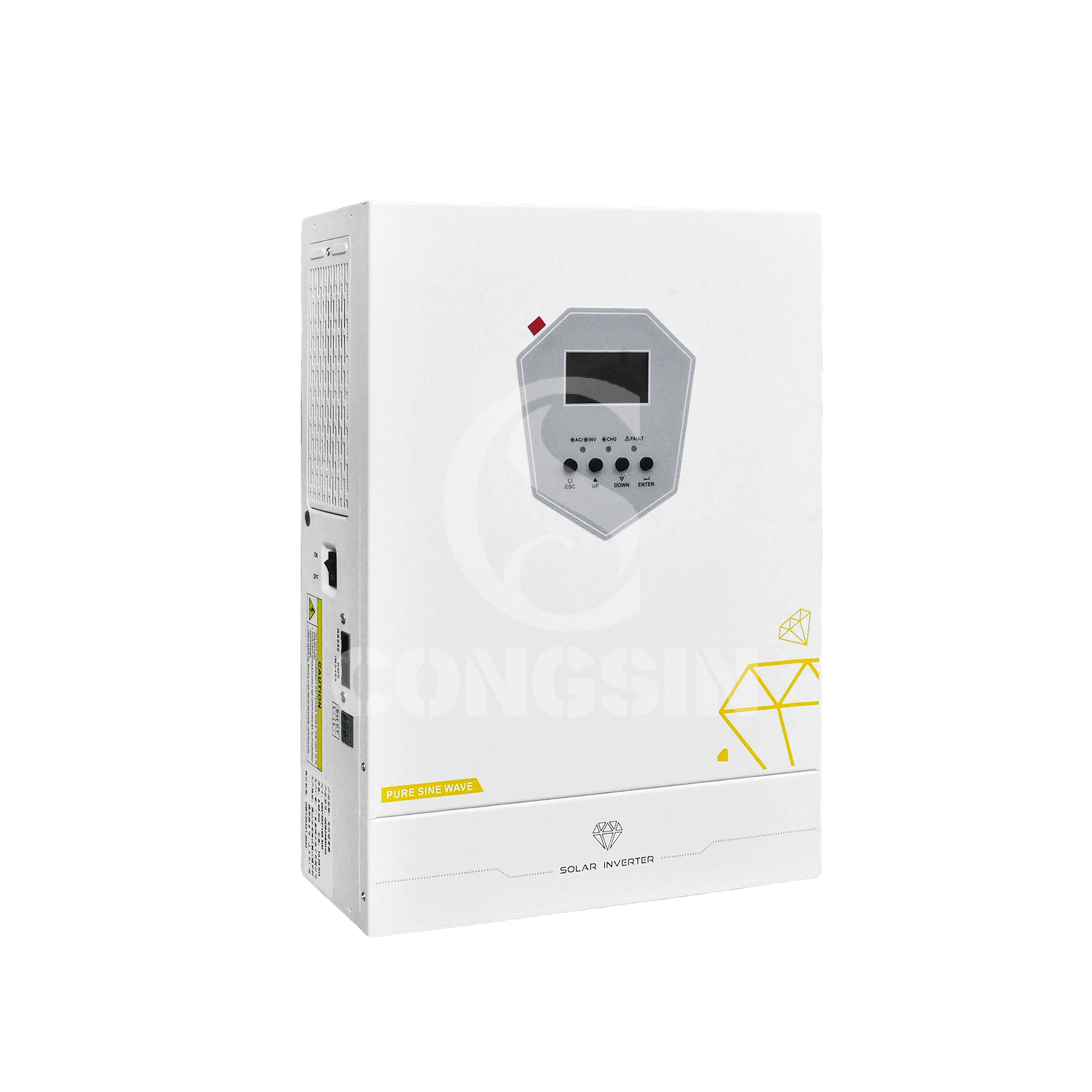
Factory Direct Sales 6000W Hybrid Solar Power Inverter with Controller and LCD Display
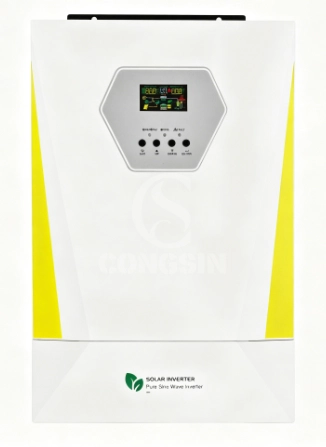
Congsin 4000W and 6000W Hybrid Inverter with Controller with LCD Display and CE Certification Solar
Power your solar system efficiently with the Congsin 4000W and 6000W Hybrid Inverter. Featuring an integrated MPPT Controller, this CE Certified inverter ensures optimal energy conversion. Monitor performance effortlessly via the intuitive LCD Display. Reliable, powerful, and ready for your sustainable energy needs.
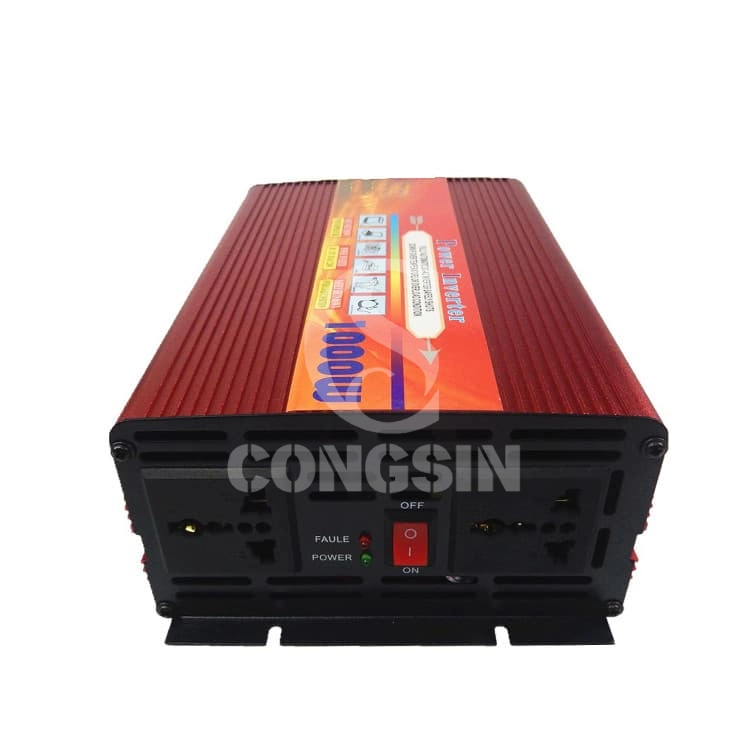
Congsin Manufacturer Wholesales Big Capability Modified Sine Wave Inverter with Red case and Double fan
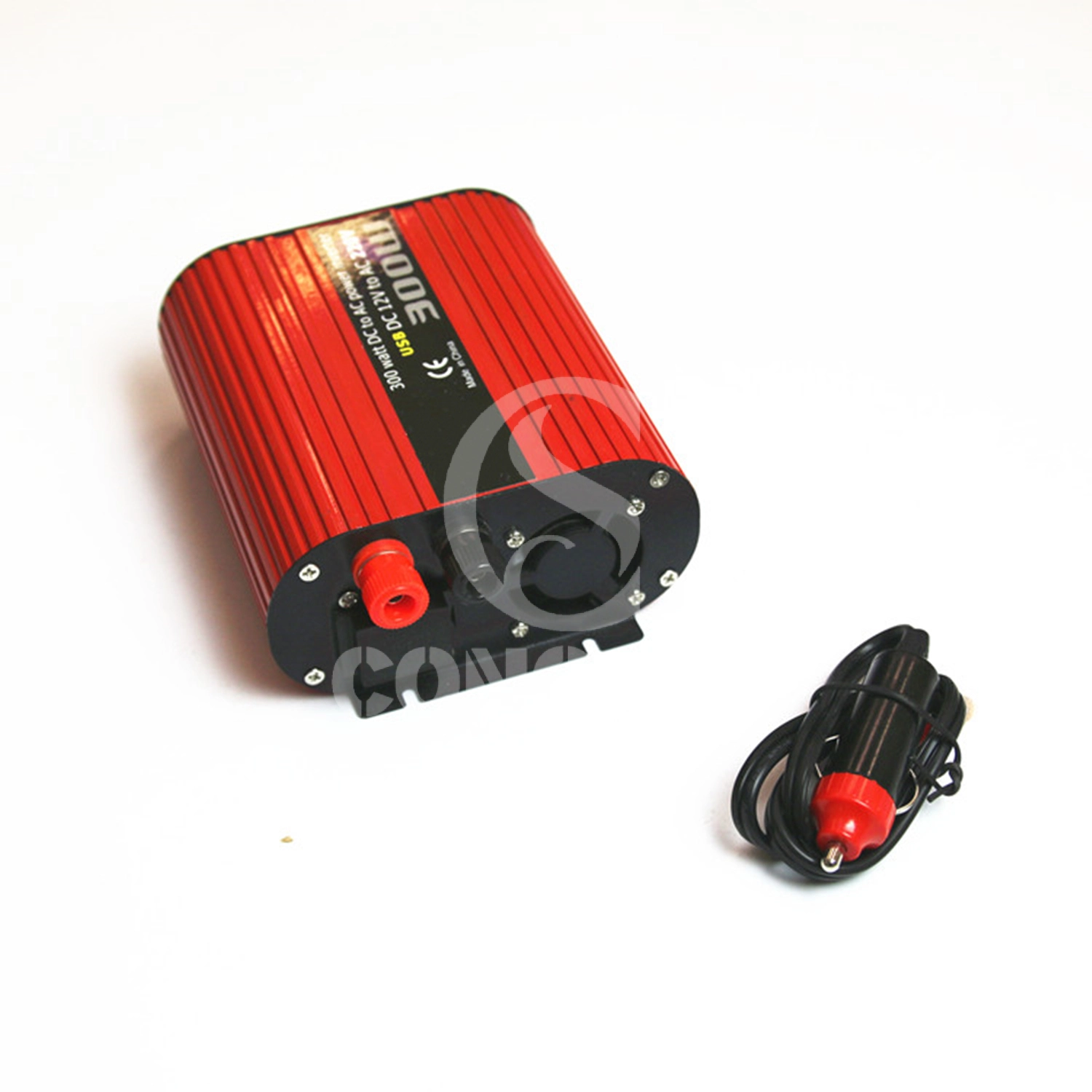
Factory Direct Sales Portable 150W Modified Sine Wave Inverter DC12V to AC220V Off-grid Sine Wave Inverter with Two USB and Universal Socket
Congsin's Portable 150W Modified Sine Wave Inverter powers your journey! This versatile Car Power Inverter with USB acts as a reliable 12V to 220V converter, ensuring an essential off-grid power supply. With dual USB ports and a universal socket, enjoy convenient power on the go.

CONGSIN is a trusted OEM factory for power inverters, solar charge controllers, and DC converters. Reliable solutions for global B2B buyers.
 High Quality
 7/24 Service
 Guaranteed Warranty
© 2025 Congsin. All Rights Reserved.
 WeChat
 Scan QR Code
sin cong
teaimei10
Whatsapp: +8618028086791
Scan QR Code